Construction equipment theft is a billion-dollar-plus annual problem in the United States. Criminal methods are becoming increasingly sophisticated, and when thieves or vandals strike, the consequences can be devastating.
Construction sites have unique vulnerabilities, including shifting perimeters, multiple access points, valuable equipment left overnight, and limited accountability for site access. When criminals exploit these weaknesses, the consequences include financial losses, delayed projects, derailed budgets, and damaged client relationships.
This guide explains how you can protect your construction projects from theft and vandalism.
Why Construction Sites Need Security
Construction sites lose over $1 billion annually to theft, with the most commonly targeted items including heavy equipment, copper wire and piping, power tools, and building materials. Less than 25% of stolen equipment is ever recovered.
While construction site theft and vandalism can happen at any time, sites are especially vulnerable overnight, over weekends and holidays, and during project transition phases. Criminals target sites during these low-activity periods when supervision is limited.
Several factors make construction sites prime targets for theft and vandalism:
- Perimeters constantly change as construction progresses, making it difficult to install reliable barriers.
- Preventing unauthorized entry is complex when multiple contractors and suppliers access sites daily.
- High-value equipment must remain on-site overnight and through long weekends.
- Many sites occupy remote or poorly lit areas.
Construction Site Security Best Practices
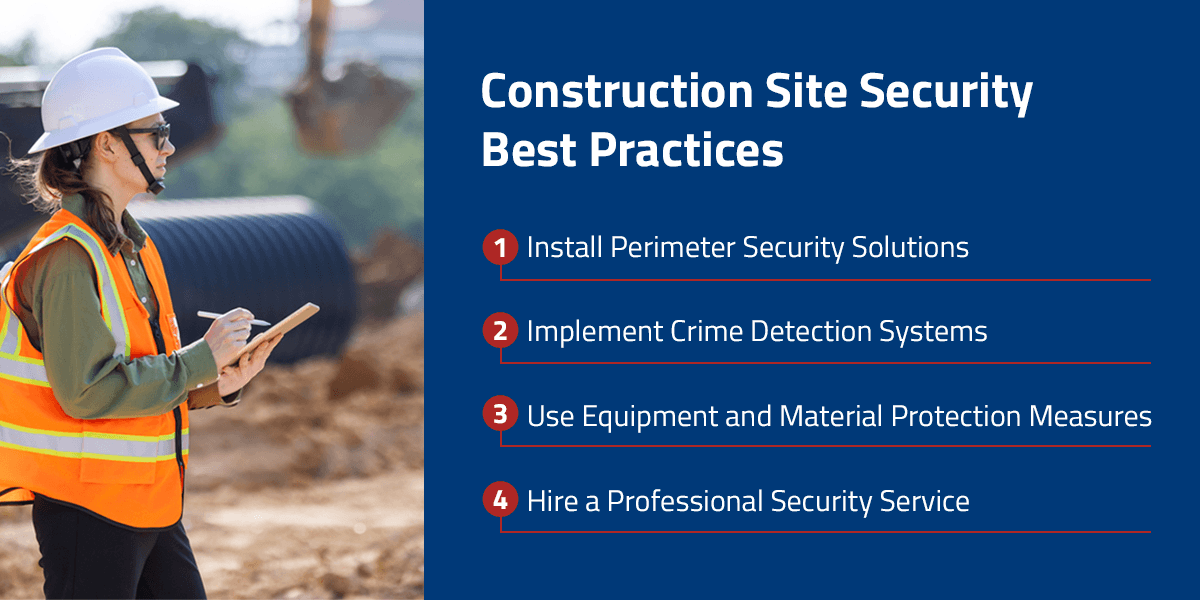
Here are four best practices for keeping your construction project on track and crime at bay:
1. Install Perimeter Security Solutions
A secure perimeter is your first line of defense. Physical barriers deter opportunistic theft and create clear boundaries for authorized access.
- Fencing: Temporary fencing systems let you adjust your perimeter as construction progresses. Install chain-link fencing at least 8 feet high, with an anti-climb mesh design featuring smaller openings. For high-risk sites, consider barbed wire toppers and a layer of portable electric fencing behind the chain-link fence.
- Lighting: Security lighting can help deter criminals and improve detection and surveillance footage of intrusion attempts. Position motion-activated or alarm-based security lights at all entry points. Solar-powered options work for remote areas without electrical access.
- Signage: Post “No Trespassing” warnings, “Video Surveillance” notices, and, if you use a portable electric fence, yellow shock warning signage. These signs clearly state that trespassers are unwelcome and that you have measures in place to deter would-be intruders.
Keep in mind that changing site layouts limits your options for perimeter security. Static solutions, such as permanent electric fencing installations, are not feasible for temporary projects.
2. Implement Crime Detection Systems
While perimeter security solutions deter and slow intruders, monitored detection systems help you recognize when an incident is in progress and respond effectively.
- Video surveillance: Install cameras along perimeter fencing, at entry points, and in equipment storage areas. Pan-tilt-zoom cameras with infrared capabilities give you 24-hour surveillance. Cloud-based systems make remote monitoring possible across multiple sites. Remember that unmonitored surveillance cameras can only provide footage for investigation and insurance claims. Real-time monitoring by security professionals is best for proactively responding to incidents.
- Motion sensors and alarms: Install sensors that trigger immediate alerts when movement is detected during off-hours. Sensor systems automatically notify security personnel and/or law enforcement.
- GPS tracking: Install GPS devices on heavy equipment, generators, and machinery. These tracking devices help law enforcement find and recover stolen vehicles and equipment.
- Access control systems: Implement access control measures such as badge readers or biometric scanners to log entry and exit times. These records show who accessed the site and when, increasing accountability for workers, suppliers, and contractors and supporting investigations if incidents occur.
3. Use Equipment and Material Protection Measures
Since equipment and material theft is the primary crime risk for most construction sites, strategies for protecting these assets can reduce crime-related losses.
- Equipment inventory: Maintain detailed records, including serial numbers, descriptions, and photos, for all equipment and tools. This documentation allows you to quickly identify missing items and supports insurance claims and law enforcement investigations. For smaller tools, implement a check-out log system that tracks which worker or contractor borrowed an item and whether it was returned.
- Removing portable equipment: Transport power tools, generators, and valuable portable equipment off-site at the end of each workday to reduce overnight theft opportunities.
- Secure storage and placement: Securing construction equipment overnight and during weekends and holidays is essential. Use lockable steel containers for tools and equipment, enclosed job boxes for power tools, and secure cages for copper wire, piping, and HVAC fixtures. Position these storage spaces away from perimeter fencing to make them more difficult for thieves to reach.
4. Hire a Professional Security Service
Professional security guards provide trained protection that adapts to your construction sites. While using multiple security strategies is more effective than a single solution, having a vigilant security presence protecting your site can be the difference-maker.
The benefits of hiring security guards include:
- Crime deterrence: Uniformed guards stationed at a construction site create a visible deterrent that discourages theft. Faced with active security personnel, many would-be thieves will choose easier targets.
- Immediate response: Guards can respond immediately to suspicious activity or unauthorized access attempts, stopping incidents before equipment leaves the site, and often before an intruder comes near your valuable assets.
- Flexible patrol options: Security services include guards stationed on-site, mobile patrols covering multiple areas throughout shifts, or guards with patrol vehicles. You can also choose between unarmed guards for standard theft prevention and armed guards for high-value sites or high-risk locations.
- Integrated security: Guards work alongside other layers in an integrated security strategy. For example, they can be the first to intervene if cameras or alarm systems detect suspicious behavior.
Protect Your Construction Site With The Guard Alliance
A well-trained guard is the cornerstone of your construction site’s security. As a leading provider of construction site security services, The Guard Alliance offers a reliable, cost-effective solution to protect your assets. When you choose us, our experienced team will conduct a thorough risk analysis and work with you to create a customized security plan for your jobsite.
Our security solutions include armed and unarmed guards, mobile patrol services with dedicated vehicles, and 24-hour dispatch support. Every guard is fully licensed and insured, with many bringing law enforcement and military backgrounds. Our services operate on flexible terms with no long-term contracts and a 24-hour cancellation notice — you can count on receiving the exact type of coverage you need, when you need it. We can dispatch guards to protect new sites in most metro areas within three hours, so you don’t have to wait for protection.
Request a quote today for peace of mind about your construction site’s security.