
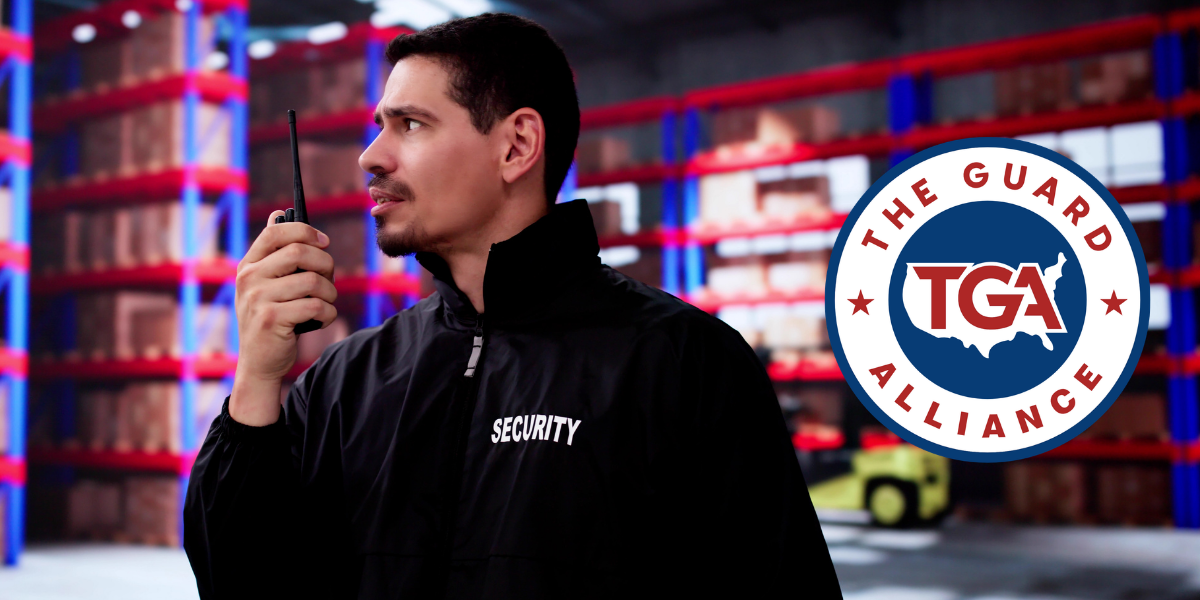
Warehouse security has become a growing priority for property managers and operations managers across the country. With high-value inventory, constant movement, and large facilities to monitor, warehouses present unique challenges that standard security approaches often fail to address.
The biggest vulnerabilities tend to show up during shift changes, around access control, and after hours. This is where structured coverage with trained security guards makes the difference between controlled operations and unnecessary liability.
Why Warehouse Security Is Under More Pressure
Warehouses are not just storage spaces anymore. They are critical hubs in supply chains, especially with the continued growth of e-commerce and logistics operations. That increased importance has made them a target.
Recent reporting highlights how theft and organized cargo crime are rising. In California, authorities have been tracking a surge in cargo theft tied to warehouse and distribution centers (ABC7 Los Angeles). In another case, a Florida warehouse theft ring led to multiple arrests after millions in goods were stolen (WFLA).
These incidents reinforce a key point. Warehouses are high-value targets, and gaps in security are quickly exploited.
The Risk Around Shift Changes
Shift changes are one of the most overlooked vulnerabilities in warehouse security. During these periods:
- Large numbers of employees enter and exit at once
- Attention is divided between operations and transition
- Access points may be temporarily overwhelmed
Without proper control, unauthorized individuals can blend in with employees or contractors.
How Security Guards Reduce Shift Change Risk
Trained security guards create structure during these transitions by:
- Monitoring entry and exit points
- Verifying credentials
- Managing crowd flow
- Identifying suspicious behavior
This visible presence alone can deter opportunistic theft or unauthorized access.
Access Control Is the Foundation
Access control is not just about locked doors. It is about knowing who is on-site, when they are there, and why. For warehouses, this includes:
- Employee access points
- Vendor and contractor check-ins
- Delivery and loading dock activity
- Restricted areas within the facility
When access control breaks down, so does accountability.
Where Many Warehouses Fall Short
Common issues include:
- Shared access credentials
- Unmonitored side entrances
- Lack of visitor tracking
- Inconsistent enforcement of policies
- Large blindspots
These gaps increase liability and make compliance more difficult to maintain.
Strengthening Access Control With Guard Coverage
Security guards support access control by adding a human layer that technology alone cannot provide. They can question irregular activity, enforce policies in real time, and adapt to changing situations.
For a broader look at how different industries approach security coverage, this resource is helpful.
After-Hours Risk Is Where Losses Happen
The risk profile of a warehouse changes significantly after hours. With fewer employees on-site, warehouses become more vulnerable to:
- Break-ins
- Internal theft
- Unauthorized vehicle access
- Vandalism
- Arson
Many incidents occur during these periods because there is less oversight.
The Role of Security Guards After Hours
After-hours coverage focuses on visibility and rapid response. Security guards typically:
- Conduct regular patrols
- Monitor surveillance systems
- Check access points and perimeter security
- Respond to alarms or suspicious activity
In higher-risk environments, armed guards may be appropriate to provide an additional level of deterrence and response capability. Some circumstances such as power outages may also call for specialized fire watch guards.
Compliance and Operational Accountability
Warehouse security is not just about preventing theft. It also supports compliance and operational standards. Property managers and operations managers are often responsible for:
- Maintaining safe working environments
- Controlling site access
- Documenting incidents and responses
Security guards contribute by maintaining detailed logs and reports that can be used for audits or investigations. This documentation becomes especially important when incidents lead to insurance claims or regulatory review.
Building a Structured Warehouse Security Plan
Effective warehouse security requires more than a reactive approach. It needs to be structured around how the facility actually operates.
Align Coverage With Operational Flow
Security should match peak activity times, including shift changes and delivery windows.
Combine Technology and Personnel
Cameras, patrol vehicles, and access systems are important, but they are most effective when paired with trained security guards who can interpret and act on what they see.
Scale Based on Risk
Not every warehouse requires the same level of coverage. Factors like location, inventory value, and past incidents should guide decisions, including whether armed guards are necessary.
Maintain Consistency
Inconsistent coverage creates predictable gaps. Structured schedules and clear protocols reduce those vulnerabilities.
Important Takeaways
Warehouse security is no longer optional or minimal. It is a critical part of protecting assets, maintaining compliance, and supporting daily operations. The highest-risk moments are predictable. Shift changes, access control points, and after-hours periods all create opportunities for loss if not properly managed.
With structured coverage from experienced security guards, warehouses can reduce liability, improve accountability, and operate with greater confidence.