Health care facility leadership faces a unique challenge. You must create an environment that remains open and welcoming while protecting patients, staff, and sensitive information from growing security threats. Workplace violence has reached crisis levels, theft costs millions annually, and regulatory compliance demands physical safeguards. This guide covers the essential elements of an effective health care security strategy.
Security Threats to Health Care Facilities
The combination of 24/7 public access, high-stress situations, vulnerable populations, and valuable assets at health care facilities creates a risk profile that requires specialized security planning.
Workplace Violence
Workplace violence is the most urgent threat facing health care facilities. It stems from high-stress, emotionally charged interactions, often with patients in pain, anxious families, psychiatric crises, and intoxication or substance withdrawal. For example, 81.6% of nurses have experienced at least one form of workplace violence. Medical professionals are up to five times more likely to experience workplace violence than workers in other industries.
When staff fear for their safety, they cannot focus on their essential healing work. The annual cost of violence to hospitals reached $18.27 billion in 2023, affecting recruitment, retention, and care quality.
Vulnerable Assets and Data
Health care facilities face significant threats from theft and data breaches. Controlled substances in pharmacies and expensive mobile equipment such as infusion pumps and monitors are high-value theft targets.
Medical facilities also house valuable data. The Health Insurance Portability and Accountability Act (HIPAA) requires physical safeguards, including facility access controls and workstation security, to prevent unauthorized access to electronic protected health information. Health care data breaches cost an average of $10.93 million per breach, the highest of any industry.
Balancing Accessibility and Security
Health care facilities must remain accessible around the clock. Patients and families often arrive in crisis and need to feel welcome. Trained security officers project professionalism while responding quickly to emerging threats and de-escalating volatile situations.
The Core Components of a Modern Health Care Security Plan
Effective medical center security relies on multiple layers of defense, including access control systems, surveillance technologies, and prioritized protection for high-risk zones.
Implementing Access Control and Visitor Management
Controlling who enters your facility and where they can go is crucial to health care security protocols. Public areas, such as lobbies, can remain open, but sensitive areas, such as operating rooms, pharmacies, and maternity wards, require tiered access.
Modern visitor management systems capture information, print badges, and screen visitors against watchlists in real time. Electronic hospital access control through key cards ensures only authorized personnel enter restricted zones, creating accountability and audit trails essential for compliance.
Integrating Security Technology
A few targeted technology investments can help security personnel and law enforcement respond quickly and effectively when needed:
- CCTV and video surveillance support real-time monitoring and forensic evidence collection.
- Duress alarms allow staff in high-risk areas to summon immediate help.
- Wearable devices send location-based alerts to security dispatch.
Prioritizing High-Risk Zones
Specific areas require heightened security and specialized protocols:
- Emergency departments experience the highest workplace violence rates due to stress, psychiatric crises, and unpredictable conditions.
- Maternity wards face infant abduction risks that require preventive and reactive protocols.
- Pharmacies housing controlled substances require specialized protection for medications and staff.
- IT server rooms and data centers storing electronic health records require restricted access and environmental controls to prevent both physical breaches and data theft.
Why Training in Health Care De-escalation Techniques Matters
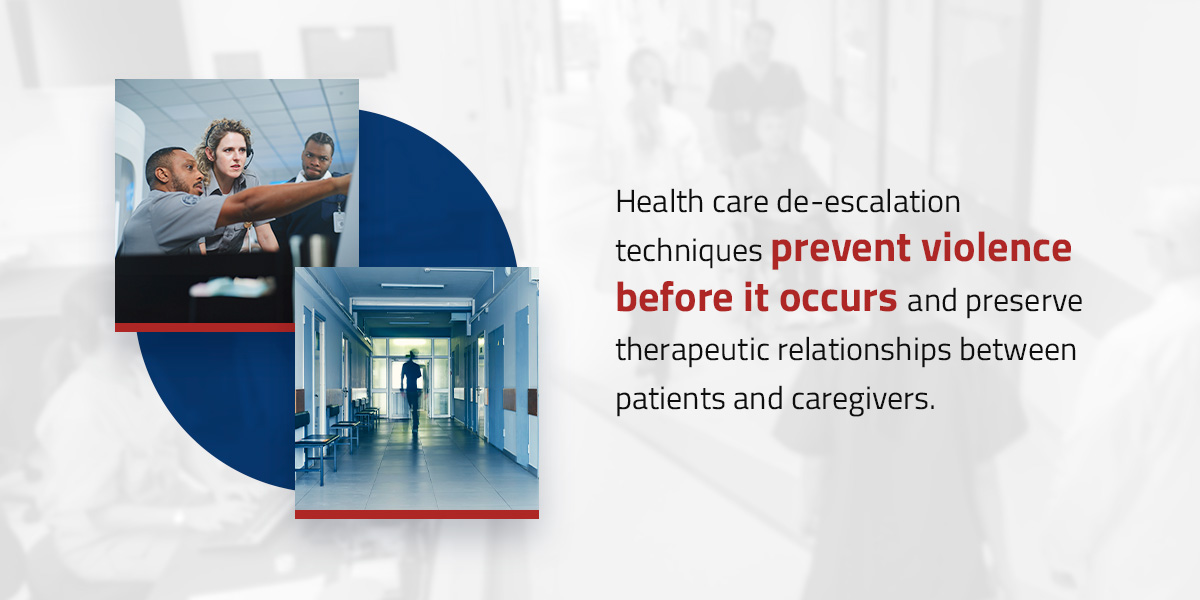
Health care de-escalation techniques prevent violence before it occurs and preserve therapeutic relationships between patients and caregivers. Clinical staff benefit from de-escalation training programs designed for health care environments. This training can be a valuable part of workplace violence prevention, teaching nurses and front-line employees to recognize warning signs and apply verbal intervention techniques.
Professional security personnel can take this training to an advanced level. When a situation escalates or the risk is high, they can call trained security guards.
Look for a security partner that offers guards ongoing de-escalation education using frameworks such as CPI’s Crisis Development Model, which identifies five phases of behavioral escalation and teaches intervention strategies for each stage. Trained security officers recognize subtle verbal, physical, and emotional escalation cues, and can apply proven techniques to defuse these situations and protect your staff. Security officers can act as neutral third parties who can intervene when staff-patient interactions become confrontational.
The Decisive Role of the Professional Security Officer
A trained, on-site security guard helps your entire security strategy work in real-world health care conditions. Hospital security guards are skilled professionals who serve as the facility’s immediate responders. The benefits of hiring professional health care facility security guards include:
- Immediate on-scene response: Police can arrive within minutes for high-priority incidents of ongoing violence, but when every moment counts, on-site officers intervene within seconds.
- Proactive deterrence: Visible security presence helps to deter violence. Officers conduct rounds, monitor high-risk areas, and identify vulnerabilities.
- Skilled de-escalation in action: Security officers apply verbal de-escalation techniques. They serve as neutral third parties and have the training to intervene when staff-patient interactions become confrontational.
- Support for clinical staff: Security personnel manage non-clinical situations, including patient security, so doctors and nurses focus on patient care. They provide backup during high-risk interactions, escort staff to parking lots, and respond to panic alerts.
3 Tips for Building Your Facility’s Security Strategy
Implementing effective security requires assessing risks, matching solutions to the specific environment, and understanding the financial impact of each investment.
Start With a Professional Security Risk Assessment
A thorough security risk assessment identifies your facility’s specific vulnerabilities. Health care organizations must develop security plans based on facility-specific risk assessments, conducted by qualified professionals who understand health care environments.
Effective assessments involve multidisciplinary teams including security, clinical leaders, facilities managers, and risk management. They evaluate physical layout, access points, high-risk areas, current security measures, historical incident data, and surrounding community crime patterns. Industry best practice recommends conducting these assessments before major facility changes and repeating them annually or after significant security incidents. This helps to direct your security investments to the most impactful areas.
Tailor Security to Your Facility Type
Effective security partners customize solutions based on your facility type:
- Acute-care hospitals: Emergency department security addresses violence risks, while parking structure safety and pharmacy security protect against theft of controlled substances.
- Behavioral health facilities: Facilities can enhance safety with ligature-resistant design, specialized de-escalation protocols, and systems to prevent patient elopement.
- Nursing homes and long-term care facilities: Nursing home security services should focus on preventing resident wandering, screening visitors to protect vulnerable populations, and monitoring for elder abuse.
- Assisted living facilities: Assisted living security involves implementing visitor verification systems, preventing elopement by residents with dementia, and controlling access to residential areas.
- Outpatient clinics: Outpatient clinics can improve safety by installing access control systems and panic buttons for staff working alone or during evening hours.
Track Your Security ROI
Professional security helps your facility avoid major expenses, including multi-million-dollar lawsuits from workplace violence incidents, regulatory fines, theft of expensive medications and equipment, and workers’ compensation claims from injured staff.
Facilities with strong security retain staff longer because employees choose workplaces where they feel safe. For example, 60% of registered nurses have changed their job, left the profession, or considered doing so due to workplace violence. Addressing these concerns with a strong security strategy could be the difference that keeps your best staff at your facility long term.
Create a More Secure Healing Environment With The Guard Alliance
A truly secure health care facility relies on evidence-based protocols, integrated technology, and highly trained security professionals. Since 2010, The Guard Alliance has delivered security solutions for health care facilities nationwide, beginning every partnership with an optional risk and threat analysis to understand your specific vulnerabilities.
Our team leaders include former law enforcement and retired military personnel trained in crisis response through rigorous screening standards. We provide same-day service in most major cities with the flexibility to scale coverage quickly during periods of heightened risk. We maintain dedicated site supervisors and offer flexible terms, including 24-hour cancellation with no hidden fees.
Request a quote today to protect your patients, staff, and sensitive information with our health care facility security guards.