
Retail theft has evolved far beyond opportunistic shoplifters slipping items into pockets. Today, sophisticated criminal enterprises systematically target businesses, threatening bottom lines and employee safety. Organized Retail Crime (ORC) often means coordinated, aggressive operations run by professional networks with business-like supply chains.
As these operations evolve, the financial and human costs escalate. Shoplifting incidents are surging, with threats and acts of violence during theft becoming commonplace. If you’re ready to protect your retail business, this guide will help you understand modern ORC and implement a reliable defense approach that balances prevention with safe response protocols.
Understanding the Threat of ORC
Before developing your organized retail crime prevention strategy, you need to understand what you’re facing. ORC is a different threat than traditional shoplifting, and the potential costs of underestimating it are significant.
What Is Organized Retail Crime?
The FBI defines ORC as large-scale retail theft with the intent to resell the stolen goods for financial gain. Unlike simple shoplifting, ORC involves coordinated groups operating systematically across multiple locations with defined roles.
These operations function like supply chains. Boosters physically steal merchandise using sophisticated methods such as foil-lined bags. Fencers convert stolen goods into cash through online marketplaces, pawn shops, or storefronts that appear legitimate. Increasingly, stolen goods appear on major e-commerce platforms alongside legitimate items.
The same networks involved in ORC also tend to participate in drug trafficking, weapons smuggling, human smuggling, and international money-laundering. These are dangerous criminals, and stopping their for-profit theft tactics is important to public safety beyond retail.
Is ORC Rising?
ORC is a growing problem for many U.S. retail businesses. The National Retail Federation’s (NRF) 2025 study found an 18% increase in shoplifting incidents from 2023-2024, with threats or acts of violence during theft increasing 17% during the same period. The scope of the problem extends beyond borders, with 67% of retailers reporting involvement from transnational ORC groups in theft against their business. California’s ORC Task Force recovered 33,354 stolen items worth over $3.3 million in just the first two months of 2026.
What Are the Costs of ORC?
Some reports indicate that annual losses from retail inventory shrinkage can reach $142 billion. Based on an analysis of NRF data, these losses equal 2% of all revenue. Besides inventory shrinkage, costs include security infrastructure investments, lost productivity, and potentially increased insurance premiums. Along with the financial costs, employees face physical danger during confrontations and psychological stress from violent incidents, making professional retail security solutions increasingly essential.
Combining Organized Retail Theft Prevention and Active Response
Effective retail loss prevention strategies require balance. You must be prepared to deter crime and to respond safely when incidents occur.
Proactive Strategies to Deter Theft
Every retail store can benefit from a visible human security presence, which creates a strong psychological deterrent. Uniformed security guards signal active security, and criminals conducting surveillance will factor visible deterrents into their target selection, meaning your store may be less likely to be targeted if you have guards on duty.
Environmental design principles also matter. Store layouts that optimize visibility, use strategic mirrors, and feature well-lit environments signal attentive management. Staff training in customer service as a security tool, along with recognition of suspicious behavior patterns, will further strengthen your defense.
Effective Response Protocols
If a theft incident occurs, the primary goal is safety, with asset recovery as a priority only once safety is ensured. Staff training should emphasize observation over intervention. Maintain a safe distance, note descriptions, and never block exits. Only store security personnel with proper training and authority should use physical force.
Preestablished law enforcement contacts and protocols defining when to call them can help ensure a timely and effective response. When taking legal action, high-quality video, detailed incident reports, and witness statements will strengthen your case.
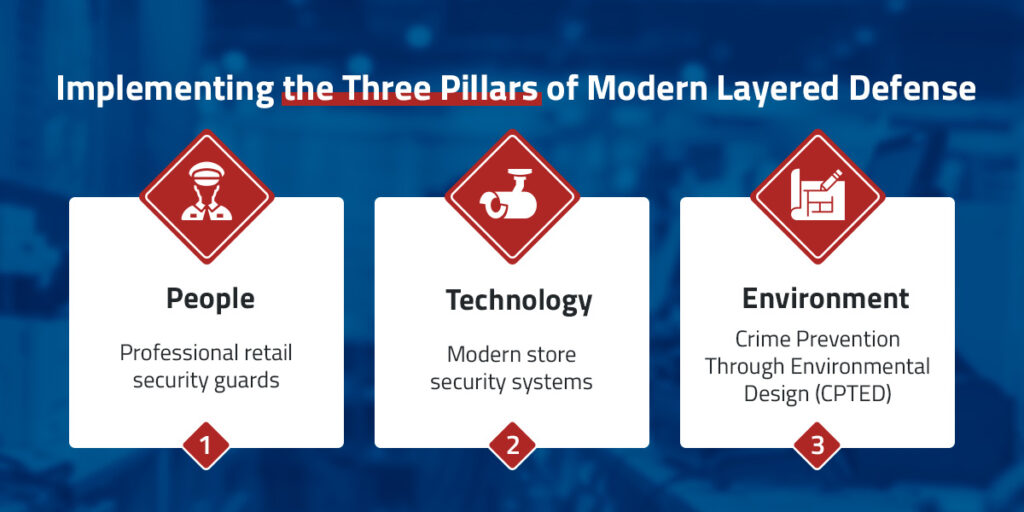
Implementing the Three Pillars of Modern Layered Defense
Comprehensive retail store security depends on three essential pillars working together — people, technology, and environment.
1. People
People remain the most critical component. Professional retail security guards provide a visible presence to deter crime as well as have specialized training in theft pattern recognition and de-escalation techniques to intervene if necessary.
Store employees are also essential to preventing theft. While keeping them safe requires leaving direct interventions to security professionals, employee training should include recognizing suspicious behavior, documenting evidence, and minimizing risks to personal safety.
2. Technology
Technology amplifies human effectiveness in stopping crime. Modern store security systems go far beyond traditional CCTV and include:
- Advanced video surveillance: High-definition cameras with cloud-based storage provide comprehensive coverage and remote monitoring capability for evidence retention.
- AI-powered analytics: Real-time threat detection identifies loitering and unusual movement patterns, while behavior analysis flags suspicious activity and alerts operators to specific events requiring attention.
- Radio Frequency Identification (RFID) technology: RFID inventory tracking provides instant visibility when items leave without purchase, offering particularly valuable protection for high-value merchandise.
- Access control systems: These platforms restrict access to storage areas and loading docks while documenting audit trails showing who accessed which areas and when.
3. Environment
Crime Prevention Through Environmental Design (CPTED) uses the physical design of a space to make crime difficult. Core CPTED security principles for retail include:
-
Natural surveillance: Low-profile shelving near walls and exits, minimal visual obstructions, and strategically placed checkout areas maximize visibility throughout the store.
-
Access control: Controlled entry and exit points, clear traffic paths, and restricted access to storage areas limit opportunities for concealment and theft.
-
Territorial reinforcement: Well-maintained appearance, organized displays, and branded security presence signal active management and deter criminal activity.
-
Thorough lighting: Eliminate dark corners inside and illuminate parking areas and building perimeters to remove hiding spots.
-
Regular maintenance: The “broken windows” theory holds that visible neglect invites crime, while prompt repairs signal attentiveness and deter crime.
Measuring the ROI of Enhanced Security
The ROI of a strong anti-ORC security strategy goes beyond preventing inventory loss. Strategic security investments deliver measurable returns across multiple categories:
- Direct loss prevention: Reduced inventory shrinkage and recovered merchandise value protect your bottom line.
- Insurance impact: Documented retail anti-theft measures may lead to reduced premiums, lower deductibles, and better coverage terms.
- Operational efficiency: Less staff time handling incidents, reduced disruption to normal operations, and improved inventory accuracy increase productivity.
- Employee benefits: Improved retention from safer work environments, reduced workers’ compensation claims, and higher morale reduce recruitment and training costs.
- Customer experience: Build customer loyalty and sustain foot traffic by fostering a heightened sense of safety and positive shopping experiences.
- Legal cost avoidance: Reduced civil liability from inadequate security and the lack of a need for negligent security lawsuits helps protect you against expensive litigation.
Protect Your Business From ORC With The Guard Alliance
Effective defense against ORC depends on the right combination of people, technology, and environmental design. With a reliable layered strategy, you can protect your store from organized retail theft and see measurable ROI. For a professional retail security service you can count on, choose The Guard Alliance.
We bring extensive experience in retail security strategy, including protecting sites from modern ORC threats. Our professional security officers include former law enforcement agents and retired military personnel who know how to react to any security situation in a retail environment. We can deploy licensed, bonded guards to your location in as little as three hours in most metro areas.
Ready to protect your business from organized retail theft? Contact us to request a quote today.