
- Extreme Weather and Power Outages Affecting California in 2025
- Why Spring Weather Matters for Job-Site Security
- Security Planning: Guards, Tech, and Weather‑Responsive Measures
- Armed vs. Unarmed Guards: Strategic Considerations
- Conclusion: Secure, Resilient Job-Sites for Spring 2026
- Contact The Guard Alliance
As California construction projects gear up for spring 2026, job-site security is an increasingly critical component of planning: not just for theft and trespassing, but also to address heightened risks from extreme weather and power outages. Events from 2025 show how weather‑related disruptions and infrastructure stresses can expose job-site vulnerabilities. Coupled with rising demand for enhanced security models, including armed and unarmed guards, contractors, and site managers must update their plans to protect personnel, materials, and project timelines.
Extreme Weather and Power Outages Affecting California in 2025
California’s weather in 2025 delivered a stark reminder of how quickly outdoor conditions and infrastructure strain can escalate risks on and around job sites. A prolonged suite of intense wildfires and wind‑driven emergencies in Southern California during January 2025 forced evacuations, destroyed thousands of structures, and left communities grappling with power line failures. These fires, exacerbated by dry Santa Ana winds and historic drought conditions, illustrated how weather‑driven stress on grid infrastructure can lead to outages and hazardous conditions that ripple into neighborhoods and worksites alike.
Pacific Gas and Electric (PG&E) also deployed Public Safety Power Shutoffs (PSPS) throughout 2025, pre‑planned outages intended to prevent wildfire ignitions from energized lines when extreme winds and dry conditions threaten the grid. These PSPS events, driven by extreme weather forecasts and wildfire risk assessments, led to precautionary power outages affecting communities across Northern and Central California.
This combination of climate‑driven wildfire risk plus proactive utility outages increases the likelihood that construction job sites may temporarily lose power or experience rapid changes in environmental conditions. Such disruptions can complicate lighting, alarm systems, perimeter access, and equipment operations, creating security gaps that opportunistic actors may exploit.
Why Spring Weather Matters for Job-Site Security
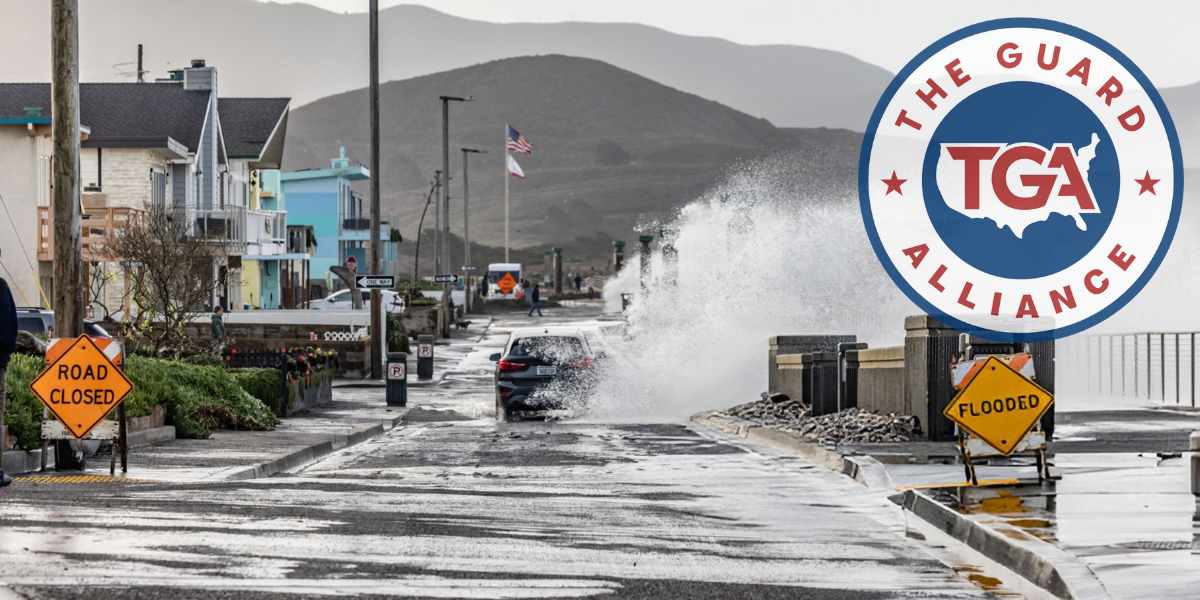
Spring’s variable conditions—atmospheric rivers, storm systems, high winds, and occasional flooding threats—can stress jobsite infrastructure, impacting both safety and security. Storm‑related outages or the aftermath of wildfire suppression can leave sites dark, unattended, or open to unauthorized access. Weather‑related outage periods also reduce visibility, disable electric locks or lighting, and may slow emergency response times if local agencies are stretched thin.
Seasonal weather events in California often influence power reliability:
- Public Safety Power Shutoffs (PSPS): Utilities like PG&E continue to prepare for precautionary outages when forecast conditions indicate wildfire threats, with multiple shutoff events in 2025.
- Wind‑driven wildfires: Extreme winds contributed to major fire outbreaks in early 2025, underscoring how climate‑amplified weather can drive infrastructure response strategies.
- Atmospheric river dynamics: Powerful moisture plumes remain a perennial spring threat in California, bringing heavy rains and flood risks that can further stretch local infrastructure resilience and complicate security coverage.
For construction job-sites, these conditions mean planners must think beyond traditional theft prevention—anticipating weather‑linked service interruptions that affect site access controls, lighting, alarm readiness, and worker safety.
Security Planning: Guards, Tech, and Weather‑Responsive Measures
Construction site security in California in 2025 evolved to reflect a mix of climate risks and traditional threats such as theft and vandalism. Industry sources note that spring and summer months traditionally see upticks in unauthorized access and equipment theft simply because sites are active, open, and filled with valuable tools.
Choosing between armed guards and unarmed guards depends on the risk profile, local regulations, and community context:
- Unarmed guards are often ideal for routine monitoring, perimeter checks, and deterrence without escalation risk. They can oversee access points, check on lighting systems, and coordinate with technology like CCTV and alarm systems.
- Armed guards may be considered in higher‑risk contexts—such as sites with history of organized theft, significant material inventories, or locations adjacent to homeless encampments or high‑crime areas—as part of a layered security strategy.
Here’s a security planning checklist for California jobsites this spring:
- Assess weather vulnerability: Map outage risks and exposure to wind, flooding, or wildfire threats.
- Evaluate lighting and backup systems: Ensure perimeter and interior lighting have generator or battery backups during outages.
- Choose appropriate guard staffing: Determine whether armed or unarmed guards better suit your site’s threat level.
- Layer technology with personnel: Combine guards with CCTV, motion sensors, and remote monitoring for responsiveness.
- Coordinate with local law enforcement: Share access plans and emergency contact information to ensure a rapid response in the event of incidents.
- Plan for weather‑linked outages: Incorporate outage scenarios into your security SOPs and communication plans.
Armed vs. Unarmed Guards: Strategic Considerations
Security professionals emphasize that armed guards are not always necessary—and, in many jurisdictions, may require additional licensing or oversight. Unarmed guards, when paired with strong surveillance and lighting systems, often provide sufficient deterrence without introducing elevated liability. The choice should be based on:
- Crime trends around the site
- Value of equipment and materials on site
- Community norms and legal environment
- Project’s risk tolerance and client expectations
Recent coverage of commercial property security challenges in California highlights that evolving theft tactics and trespassing issues have prompted businesses to rethink security models. Whether managing retail locations or construction zones, site stakeholders are increasingly exploring both guard presence and advanced monitoring tools to mitigate loss and improve site control.
Conclusion: Secure, Resilient Job-Sites for Spring 2026
Spring 2026 is shaping up to be a season in which security planners must reconcile traditional construction risks with the realities of extreme weather and power outages—especially in California. The lessons of 2025 underline how quickly weather and infrastructure stressors can combine to create security vulnerabilities. By adopting layered security approaches, planning for outage scenarios, and choosing appropriate guard staffing (armed or unarmed), project managers can protect both personnel and project assets while maintaining momentum through what may be an unpredictable season.
Contact The Guard Alliance
The Guard Alliance is proudly headquartered in the Bay Area and maintains offices throughout the Golden State. Our expert security personnel are on hand to respond to emerging security concerns during periods of extreme weather. Armed, unarmed, fire watch, and vehicle patrol guards can deploy within hours to most communities. If you need guards on site today, contact us immediately.